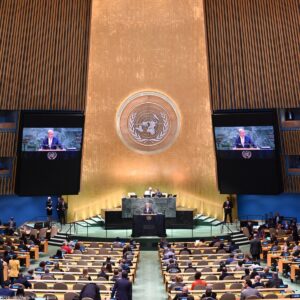
The 80th session of the United Nations General Assembly (UNGA), taking place from 22 to 30 September 2025, opens at a moment of profound urgency. Under the theme “Better together: 80 years and more for peace, development and human rights,” this year’s gathering of world leaders is more than a ceremonial milestone. It is a test of global willpower. With escalating climate shocks, growing economic inequalities, and the Sustainable Development Goals (SDGs) dangerously off track, UNGA 2025 must deliver not just dialogue but decisive action.
The week-long high-level segment is designed to showcase innovation and solutions. The SDG Media Zone, running from 22 to 26 September, will bring together activists, policymakers, and experts in dynamic conversations on sustainable development. Parallel to this, the Goals Lounge (20–26 September), convened by the UN Deputy Secretary-General, will host unscripted dialogues and interactive experiences aimed at breathing life into global cooperation. These platforms will set the stage for a renewed commitment to solidarity and problem-solving.
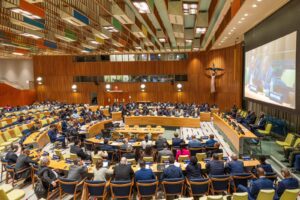
But the centerpiece of UNGA’s climate agenda will be the Climate Summit on 24 September, convened by the UN Secretary-General in the Trusteeship Council Chamber. Leaders are expected to arrive in New York with new national climate action plans, demonstrating not only their ambition but their readiness to seize the opportunities of the clean energy era. Coming just weeks before COP30 in Brazil, this summit is seen as the last major chance in 2025 to prove that the international community can rise to the challenge of protecting people and the planet.
The expectations are clear and concrete. First, accelerating the implementation of Nationally Determined Contributions (NDCs) is no longer optional it is essential. The 1.5°C goal, the cornerstone of the Paris Agreement, is slipping dangerously out of reach. Scientists warn that every fraction of a degree beyond that threshold will result in exponentially worse consequences, from intensified droughts and rising sea levels to food insecurity and forced migration. Strengthening NDCs is critical, but implementation through robust institutions, policy coherence, and grassroots engagement is what will ultimately decide success or failure.
Second, reforming the global financial system has become a moral and practical imperative. Developing nations, despite contributing the least to greenhouse gas emissions, are bearing the brunt of climate impacts. Yet they are often shackled by debt, leaving little fiscal space to invest in adaptation or renewable energy. At UNGA 2025, there is growing momentum to push for debt relief, restructuring, and expanded liquidity through mechanisms such as Special Drawing Rights (SDRs). Reforming multilateral development banks to prioritize climate action is also on the table. Without these systemic shifts, ambitious climate plans will remain words on paper, unaffordable for those who need them most.
Third, the world looks toward progress on a Global Climate Finance Charter – a framework that could reshape how resources are mobilized and distributed. Current climate finance flows fall far short of the trillions required annually to support both climate and development goals. Worse still, much of the funding is inaccessible to the countries most in need, hampered by bureaucracy and inequitable terms. A charter would not only aim to close this gap but also ensure finance is predictable, fair, and directed toward transformative solutions. For Africa, Asia, and small island states, such a mechanism could mean the difference between resilience and collapse.
The urgency of this moment cannot be overstated. According to the UN, over 3.6 billion people already live in areas highly vulnerable to climate change, with developing countries shouldering the heaviest burden. Each year of delay adds billions in costs and pushes millions deeper into poverty. UNGA 2025, therefore, is not just another diplomatic gathering; it is a moral reckoning. Will leaders choose solidarity and decisive action, or will they allow another year to slip by with promises unmet?
In many ways, the path forward is clear. Accelerated NDC implementation offers a roadmap to reduce emissions. Financial reform can unlock the means for vulnerable nations to adapt and thrive. A Global Climate Finance Charter could finally bridge the gap between lofty commitments and lived realities. What remains uncertain is whether the political courage exists to deliver.
As the world turns its eyes to New York this week, the stakes could not be higher. The choices made at UNGA 2025 will echo far beyond its halls into the farms of drought-stricken Africa, the flood-prone cities of Asia, the hurricane-battered coasts of the Americas, and the small island states fighting for their very survival. This Assembly has the power to demonstrate that multilateralism still matters, that solidarity is more than rhetoric, and that global cooperation can still change the course of history.
The message is simple yet urgent: the time for hesitation is over. UNGA 2025 must be the moment the world chooses action, justice, and a sustainable future for all.
Follow us for more: